Blue Origin’s Setback Is a Wake-Up Call for the Future of Space Infrastructure

The recent explosion of Blue Origin's New Glenn rocket during a test fire at its Florida launch facility is more than an isolated engineering failure. It serves as a stark reminder that the future of the global space economy remains highly dependent on a limited number of launch providers and critical pieces of infrastructure.
While rocket failures are not uncommon in the history of space exploration, the implications of this incident extend far beyond a single vehicle. The explosion reportedly caused significant damage to Launch Complex 36, Blue Origin's only operational orbital launch pad for New Glenn, potentially delaying future missions for an extended period.
Space's Growing Capacity Challenge
The modern space industry is experiencing unprecedented demand. Governments are accelerating lunar exploration programs, defense agencies are increasing investments in space-based capabilities, and commercial organizations are deploying thousands of satellites to support communications, Earth observation, navigation, and emerging data services.
At the same time, launch capacity has not expanded at the same pace.
The Blue Origin setback highlights a growing imbalance between demand for access to space and the industry's ability to deliver reliable launch services at scale. When a major launch provider experiences disruption, the effects ripple across multiple sectors, impacting satellite operators, government agencies, and commercial customers alike.
This challenge is particularly relevant as organizations increasingly view space as critical infrastructure rather than a niche industry.
The Moon Race Is Entering a New Phase
The timing of the incident is especially significant given the accelerating global race back to the Moon. Recent plans involving lunar surface transportation and long-term habitation underscore how rapidly lunar exploration is transitioning from scientific experimentation to infrastructure development.
Unlike previous eras of exploration, success in the new lunar economy will depend on dependable transportation systems capable of moving cargo, equipment, and eventually people between Earth and the Moon on a recurring basis.
Every launch delay therefore becomes more than an operational inconvenience. It affects schedules, budgets, supply chains, and strategic objectives across the broader ecosystem.

The Risks of Overreliance
One of the most important lessons from this event is the danger of overreliance on a single dominant launch provider.
Today, much of the industry's growth is increasingly tied to the availability of launch services from a handful of companies. When one provider encounters delays, customers often have limited alternatives.
This concentration creates systemic risk.
A healthy space economy requires redundancy, competition, and multiple pathways to orbit. Just as global transportation networks depend on multiple airlines, ports, and logistics providers, the future space economy will require a diversified launch ecosystem capable of absorbing disruptions without slowing innovation.
Opportunity for Emerging Players
While the setback is clearly a challenge for Blue Origin, it may create opportunities for emerging launch companies seeking to expand their market presence.
As satellite deployment accelerates and lunar ambitions grow, demand for launch services is likely to exceed the capacity of any single provider. Companies developing next-generation launch systems may find increased opportunities to secure commercial contracts, government partnerships, and strategic investments.
History suggests that major industry disruptions often accelerate innovation by encouraging new entrants and alternative solutions.
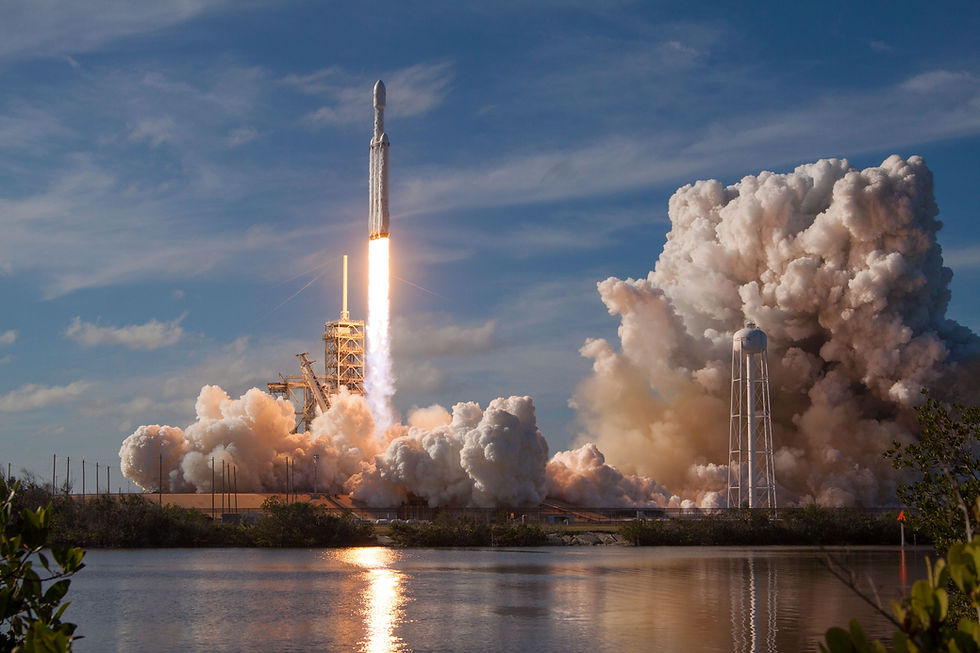
Beyond Rockets: Building Space Infrastructure
Perhaps the most important takeaway is that space is entering an infrastructure era.
The conversation is no longer solely about building bigger rockets. It is about developing resilient systems that include launch facilities, supply chains, manufacturing capabilities, communications networks, orbital services, and lunar logistics.
The winners of the next decade may not simply be the organizations that build the most powerful launch vehicles, but those that create the most reliable and scalable infrastructure supporting a continuously expanding space economy.
Looking Ahead
Blue Origin will likely recover from this setback. Space history is filled with examples of organizations that learned from failures and emerged stronger. The broader question is whether the industry can use moments like this to strengthen the resilience of the entire ecosystem.
As governments and businesses invest billions into lunar exploration, satellite constellations, and space-based services, the need for diversified launch capacity has never been greater.
The explosion of a single rocket may ultimately be remembered not as a setback for one company, but as a reminder that the future of space depends on building a deeper, more resilient, and more interconnected launch ecosystem capable of supporting humanity's ambitions beyond Earth.