

America’s Data Center Gold Rush: The New Industrial Policy Hiding in Plain Sight

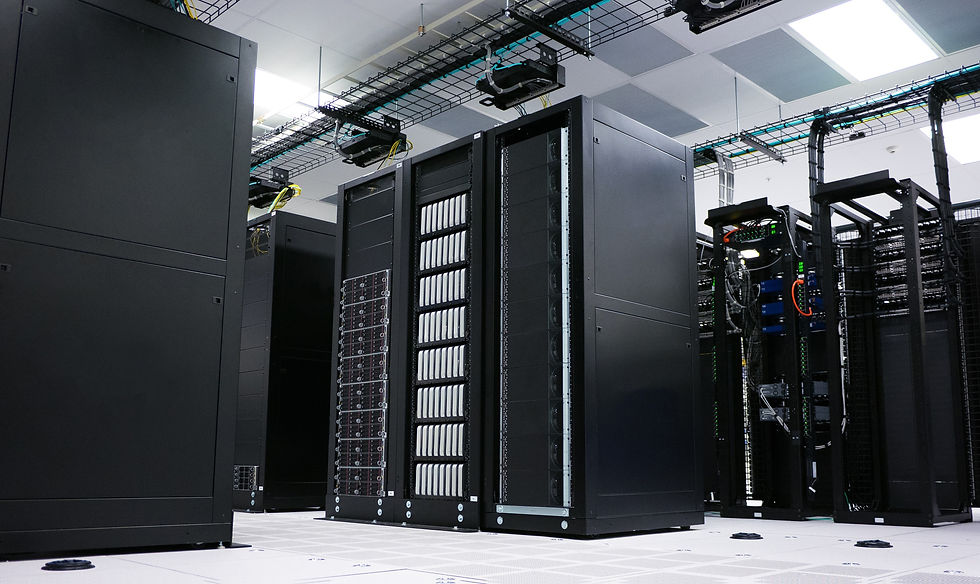
In the quiet outskirts of Northern Virginia, Texas, and the Midwest, a new kind of factory is rising -windowless, power-hungry, and humming with silicon. These are not relics of the industrial past, but the infrastructure of the AI economy. The scale of investment pouring into U.S. data centers is staggering and its implications for the broader economy are only beginning to surface.
Overview
What began as a cloud-computing expansion has morphed into a full-blown capital supercycle. Hyperscalers—Amazon, Microsoft, Alphabet, and Meta Platforms—are collectively expected to spend $600–700+ billion annually on AI infrastructure, much of it in the United States.
Total data center capex globally is approaching $750 billion in 2026, with U.S. capacity expansion at the center of this surge.
This is not just another tech cycle. It is the physical manifestation of digital ambition—steel, concrete, chips, and electrons forming the backbone of the AI era.
Key insights
1. Data centers are becoming a primary driver of U.S. GDP growth
Recent economic data suggests that AI and data center investments are no longer peripheral—they are central. Business investment in AI infrastructure has materially contributed to GDP growth, even offsetting weaker consumer spending.
In fact, AI-related categories accounted for nearly 39% of U.S. GDP growth through much of 2025, a structural shift in how economic expansion is generated.
The implication: growth is increasingly capital-driven rather than consumption-led.
2. The rise of “Digital Infrastructure” as the new oil
Just as highways enabled the 20th-century economy, data centers are enabling the 21st. The U.S. already hosts over 5,000 data centers, and demand continues to outpace supply.
This buildout is not just about storage—it is about computepower, the critical input for AI. Control over compute is fast becoming a source of geopolitical and economic advantage.
3. A supply chain renaissance—with fragilities
This investment wave is cascading through the economy:
• Semiconductors: Surging demand for GPUs and memory
• Energy: Massive new electricity requirements
• Construction: Billions flowing into specialized builds
But the system is fragile. Supply chain disruptions—ranging from chip inputs to helium shortages—are already constraining growth and inflating costs.
The AI economy, for all its digital sheen, rests on very physical—and vulnerable—foundations.
4. Energy becomes the new bottleneck
If data is the fuel, electricity is the oxygen. U.S. data center demand could add hundreds of terawatt-hours of new electricity consumption by 2030, straining grids and accelerating utility investment cycles.
Utilities are responding with massive capital plans—potentially $1.4 trillion in grid investment over the next five years.
This flips a long-standing narrative: tech is no longer lightweight. It is infrastructure-heavy, energy-intensive, and deeply intertwined with industrial policy.
5. Regional economic transformation
Data centers are reshaping local economies:
• Creating high-paying technical and construction jobs
• Driving real estate demand in secondary markets
• Attracting ancillary industries (power, cooling, networking)
But they also bring tensions—water usage, land constraints, and community pushback in resource-stressed regions.

Implications
For the U.S. economy:
The data center boom is acting as a quasi-industrial policy—privately funded, but nationally consequential. It is boosting investment, productivity potential, and technological leadership. However, it also risks over-concentration of growth in a single sector.
For markets and investors:
This is a capital cycle unlike previous tech waves. Returns are uncertain, timelines are long, and capital intensity is extreme. The key question is no longer who builds the most, but who monetizes it best.
For energy and infrastructure:
The convergence of AI and energy is creating a new strategic nexus. Power availability—not capital—may become the limiting factor in AI expansion.
For labor and productivity:
While data centers create jobs, they are not labor-intensive. The broader productivity gains from AI will matter more than directemploymenteffects—raisingquestions about distribution of economic benefits.
Conclusion
The U.S. data center boom is not just a tech story—it is an economic reordering. Capital is flowing not into abstract software, but into tangible infrastructure at a scale reminiscent of railroads or telecom.
The twist? This time, the “rails” carry intelligence.
And in this new economy, the winners will not just be those who build the fastest—but those who can power, sustain, and ultimately profit from the machines that think.

